
Astronaut Medically Evacuated from ISS: A Rare Insight
For the first time in 25 years, an astronaut was medically evacuated from the International Space Station, providing valuable insights into healthcare in space and implications for future long-duration missions beyond Earth.
1/20/20264 min read
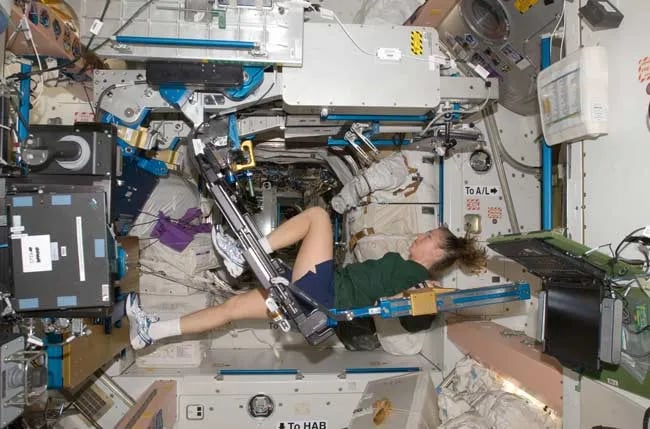
An ISS crew member trains on the Advanced Resistive Exercise Device (aRED) within the station’s Unity node as part of daily health maintenance in space. Image credit: NASA.
In early January 2026, a SpaceX Dragon capsule quietly returned four astronauts from the International Space Station (ISS) ahead of schedule. The mission, known as Crew-11, marked a historic first: the first medical evacuation from the ISS in more than 25 years of continuous human presence in space.
NASA has not released details about the medical incident, citing astronaut privacy—and rightly so. But the event itself raises an important and timely question: how does healthcare work in space, and why are serious medical emergencies so rare?
Why Medical Evacuations From Space Are So Unusual
Astronauts are among the most medically screened professionals in the world. Long before launch, candidates undergo years of physical, psychological, and cognitive testing. Conditions that could worsen in microgravity—such as heart rhythm disorders, bone disease, or vision problems—are carefully evaluated or ruled out.
Even after selection, astronauts are continuously monitored throughout their careers. According to risk modeling studies, a serious medical event might be expected roughly once every three years aboard the ISS. In reality, very few have occurred, highlighting the effectiveness of modern space medicine (NASA Human Research Program).
How Medical Care Works on the ISS
Every ISS crew includes a Crew Medical Officer (CMO). Sometimes this individual is a licensed physician; other times, they are a non-doctor astronaut with extensive medical training. CMOs can conduct physical exams, give injections, manage medications, and perform emergency procedures.
Crucially, astronauts are never medically alone. Telemedicine plays a central role, with flight surgeons and specialists on Earth guiding care in real time using video, audio, and transmitted medical data (ESA Medical Operations).
Common Health Issues Astronauts Experience in Space
Despite the extreme environment, most health issues in space are minor and manageable. A 2015 study analyzing medication use on the ISS found astronauts typically take around ten doses of over-the-counter medicine per week, mostly for everyday conditions (Putcha et al.).
The most common problems include:
Skin Conditions
Skin irritation is the most frequently reported issue in space. Research shows space-related skin problems occur up to 25 times more often than on Earth due to dry air, limited hygiene, and altered immune responses (Crucian et al.).
“Space Sniffles” and Headaches
In microgravity, fluids shift toward the head, causing nasal congestion, facial puffiness, and headaches—especially during the first days of a mission.
Sleep Disruption
The ISS experiences 16 sunrises and sunsets every 24 hours, disrupting circadian rhythms. Most astronauts sleep one to two hours less per night than they would on Earth (Barger et al.).
Musculoskeletal Injuries
Ironically, exercise is both a solution and a risk. Astronauts exercise for about two hours daily to prevent muscle and bone loss, yet NASA data shows exercise equipment is a leading cause of minor injuries aboard the ISS.
Bone Loss and the High Cost of Weightlessness
Without gravity, bones can lose about 1% of their density per month, particularly in the hips, legs, and spine. This makes resistance exercise essential—but not without danger.
Spacewalks add another layer of risk. Studies report approximately 0.26 injuries per extravehicular activity, often caused by spacesuit pressure points or restricted movement (Scheuring et al.).
To address these challenges, universities and space agencies are developing safer countermeasures. Research groups such as Northumbria University’s Aerospace Medicine and Rehabilitation Laboratory collaborate with NASA, ESA, CSA, and private companies like SpaceX to improve astronaut resilience and recovery.
Health Conditions Unique to Space
Some medical issues are exclusive to spaceflight.
Spaceflight Associated Neuro-ocular Syndrome (SANS)
SANS affects up to 70% of astronauts on long missions. Fluid shifts increase pressure behind the eyes, causing vision changes that may persist long after returning to Earth (Lee et al.).
The Case of the “Invisible Blood Clot”
In 2020, astronauts discovered a jugular vein blood clot during a routine ultrasound—without any symptoms. Doctors on Earth guided treatment remotely for over 90 days, using blood thinners delivered by resupply spacecraft. The astronaut completed the mission safely, demonstrating the power of space-based telemedicine (Auñón-Chancellor et al.).
What the Crew-11 Evacuation Means for the Future
The Crew-11 evacuation sends a clear message: crew safety comes first. As humanity prepares for missions to the Moon, Mars, and beyond, rapid returns to Earth will no longer be possible.
Future missions will rely on Earth-Independent Medical Operations, supported by AI-driven diagnostic tools, autonomous medical decision systems, and advanced crew training.
A Reminder From Orbit
That this was the first expedited medical evacuation in 25 years is not a failure—it is proof of how far space medicine has come. Yet it also reminds us that space remains hostile to human biology.
No matter how advanced technology becomes, sometimes the best medicine is still home.
References
Auñón-Chancellor, Serena M., et al. “Venous Thrombosis During Spaceflight.” New England Journal of Medicine, vol. 382, no. 1, 2020, pp. 89–90.
Barger, Laura K., et al. “Prevalence of Sleep Deficiency and Use of Hypnotic Drugs in Astronauts.” The Lancet Neurology, vol. 13, no. 9, 2014, pp. 904–912.
Crucian, Brian E., et al. “Immune System Dysregulation During Spaceflight.” Nature Reviews Immunology, vol. 18, 2018, pp. 129–143.
Lee, Andrew G., et al. “Spaceflight-Associated Neuro-Ocular Syndrome.” Journal of the American Medical Association, vol. 323, no. 10, 2020, pp. 956–957.
Putcha, Lakshmi, et al. “Medical Care Utilization on the International Space Station.” Aviation, Space, and Environmental Medicine, vol. 86, no. 6, 2015.
Scheuring, Richard A., et al. “Musculoskeletal Injuries in NASA Astronauts.” Aviation, Space, and Environmental Medicine, vol. 80, no. 4, 2009.