
SpaceX Launches 25 Starlink Satellites Amid Anomaly
SpaceX successfully deployed 25 Starlink satellites into orbit, but an unexpected anomaly in the Falcon 9's upper stage has led to a mission review, raising concerns about safety protocols, launch schedules, and future NASA missions.
2/4/20263 min read
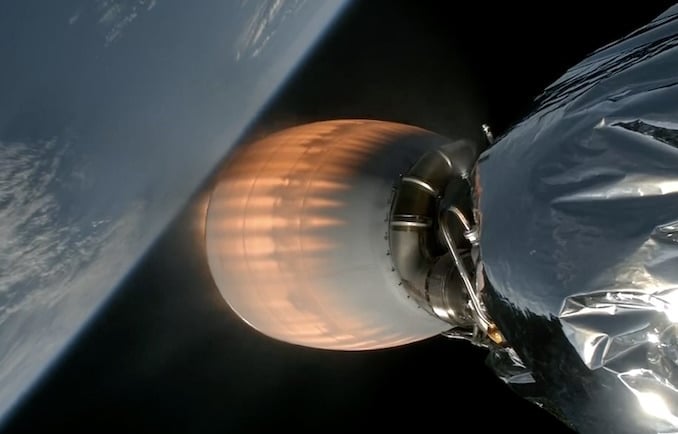
SpaceX began February with another routine-looking Starlink launch—until engineers noticed something unusual near the end of the mission. While all satellites reached their intended orbit safely, the Falcon 9 rocket experienced an upper-stage anomaly that has now triggered an internal investigation.
The launch took place early Monday morning from Vandenberg Space Force Base in California, lifting off from Space Launch Complex 4 East at precisely 7:47:11 a.m. PST. The Falcon 9 rocket followed a south-southwesterly trajectory, carrying 25 Starlink V2 Mini Optimized satellites into low Earth orbit.
According to SpaceX, the primary mission objective—satellite deployment—was completed successfully. However, the company later confirmed that an issue occurred during preparations for the rocket’s planned second-stage deorbit burn.
What Went Wrong During the Mission?
In a public statement released shortly after launch, SpaceX explained that the Falcon 9’s second stage experienced an “off-nominal condition” just before the deorbit sequence was scheduled to begin.
“During today’s Falcon 9 launch of Starlink satellites, the second stage experienced an off-nominal condition during preparation for the deorbit burn,” SpaceX stated in a social media update.
Despite the anomaly, the rocket responded exactly as designed. SpaceX confirmed that the vehicle ️successfully passivated the upper stage**, a standard safety procedure that eliminates stored energy and reduces the risk of orbital debris.
Crucially, both Merlin Vacuum engine burns were nominal, ensuring that all 25 satellites were deployed into their intended orbit without issue.
Why the Deorbit Burn Matters
The deorbit burn is a critical step in modern spaceflight. It allows the upper stage of a rocket to re-enter Earth’s atmosphere in a controlled manner, minimizing long-term space debris.
While SpaceX emphasized there was no immediate threat to satellites or public safety, any irregularity in this phase draws attention—especially given the growing global concern over orbital congestion.
Experts note that anomalies like this are rare but not unprecedented, particularly as rockets are reused more frequently and missions increase in cadence.
Impact on Upcoming SpaceX and NASA Launches
Following the incident, SpaceX postponed its next planned Starlink launch, Starlink 6-103, which was scheduled to lift off from Cape Canaveral Space Force Station.
The mission was initially delayed from Tuesday to Wednesday and then again to Thursday. During this time, observers spotted the Falcon 9 payload fairings being transported back to Hangar X at Kennedy Space Center, a move that often signals additional inspections.
This anomaly also arrives at a sensitive time for NASA. SpaceX is preparing for Crew-12, an upcoming mission to the International Space Station, scheduled for no earlier than February 11. Given NASA’s reliance on Falcon 9 for crewed flights, agency officials are expected to closely monitor SpaceX’s findings.
A Veteran Booster With an Impressive Track Record
The Starlink mission used Falcon 9 booster B1071, one of SpaceX’s most flown rockets. This launch marked its 31st flight, a testament to the company’s rapid reusability milestones.
B1071 has previously supported missions for:
The National Reconnaissance Office
Multiple smallsat rideshare missions
NASA’s Surface Water and Ocean Topography (SWOT) mission
Approximately 8.5 minutes after liftoff, the booster landed successfully on the drone ship “Of Course I Still Love You”, stationed in the Pacific Ocean. This marked:
The 175th landing on this vessel
The 567th Falcon booster landing overall
These numbers highlight how routine landings have become for SpaceX—making even minor anomalies stand out more clearly.
What Happens Next?
SpaceX has confirmed that engineering teams are actively reviewing mission data to determine the root cause of the upper-stage anomaly. The company stated it will implement any necessary corrective actions before clearing Falcon 9 for its next flight.
Historically, SpaceX investigations move quickly, with transparent updates and rapid returns to flight. Still, even small irregularities can lead to temporary delays as safety remains the top priority—especially for missions involving astronauts.
For now, the takeaway is clear:
✔ Satellites are safe
✔ No injuries or debris risks reported
✔ Investigation underway
But the aerospace world will be watching closely for SpaceX’s next move.
References
National Aeronautics and Space Administration. Falcon 9 Launch and Spaceflight Safety Overview. NASA, www.nasa.gov.
National Oceanic and Atmospheric Administration. Orbital Debris and Space Environment Risks. NOAA, www.noaa.gov.
SpaceX. “Falcon 9 Starlink Mission Update.” SpaceX Official Communications, Feb. 2026, www.spacex.com.
Space Force Space Systems Command. Launch Operations at Vandenberg Space Force Base. U.S. Department of Defense, www.ssc.spaceforce.mil.