

Mega-Hurricanes: The Need for a Category 6
As oceans warm rapidly, scientists warn that ultra-intense mega-hurricanes may soon necessitate a new Category 6 classification. Discover how climate change is creating expanding storm hotspots and reshaping our understanding of severe weather.
12/21/20253 min read
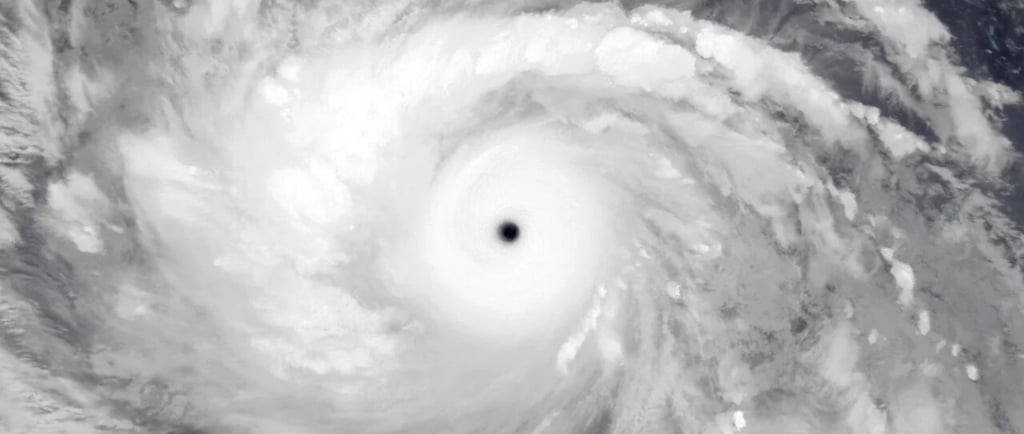
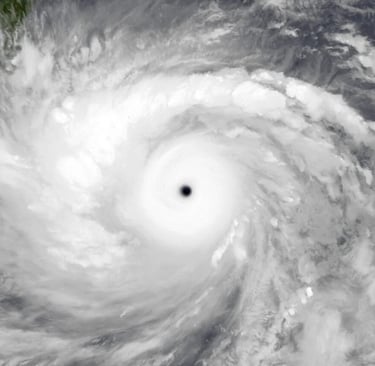
© NASA, LAADS Web, HDF File processed by Supportstorm
Names like Haiyan, Patricia, and Milton are etched into global memory for their sheer destructive power. These storms were not just severe—they pushed the limits of what modern science once believed hurricanes could become. Now, emerging research suggests such ultra-intense storms may no longer be rare events but part of a growing pattern driven by rapidly warming oceans.
New findings presented at the American Geophysical Union (AGU) conference in New Orleans indicate that ocean regions capable of fueling catastrophic “mega-hurricanes” are expanding at an alarming pace. According to climate scientists, this trend could reshape how the world measures and prepares for tropical cyclones.
Why Scientists Are Talking About a “Category 6”
The Saffir-Simpson Hurricane Wind Scale currently tops out at Category 5, covering any storm with sustained winds above 157 miles per hour. However, researchers argue this framework no longer captures the true intensity of modern storms.
Professor I-I Lin, Chair of Atmospheric Science at National Taiwan University, has been studying extreme cyclones for more than a decade. Her research team proposes the introduction of a Category 6, reserved for storms with sustained wind speeds exceeding 184 mph (296 km/h)—a level of intensity already observed multiple times (Lin et al.).
Typhoon Haiyan, which devastated the Philippines in 2013, reached wind speeds of approximately 195 mph, killing over 6,300 people and displacing millions (World Meteorological Organization). Despite its extraordinary strength, Haiyan was classified the same as weaker Category 5 storms—highlighting a critical gap in public risk communication.
Warming Oceans: The Hidden Fuel Beneath the Surface
Hurricanes draw energy from warm ocean waters, but surface temperatures tell only part of the story. Lin’s earlier research revealed that abnormally warm subsurface waters played a decisive role in Haiyan’s explosive intensification (Lin et al.).
These deep heat reservoirs allow storms to strengthen rapidly and maintain power even as they churn the ocean below—conditions increasingly common due to long-term climate warming (IPCC).
Recent analysis of storm records spanning four decades shows a clear trend:
1982–2011: 8 storms met Category 6 criteria
2013–2023: 10 storms met the same threshold
This means 25% of all ultra-intense storms recorded in 40 years occurred in just the last decade (AGU Climate Report).
Expanding Ocean Hotspots Are Raising Global Risk
The research identifies specific oceanic hotspots—regions with persistently elevated temperatures—that act as breeding grounds for mega-hurricanes.
The most prominent hotspot lies in the western Pacific, east of the Philippines and near Borneo. Another rapidly expanding hotspot exists in the North Atlantic, stretching from east of the Caribbean islands toward the Gulf of Mexico.
Alarmingly, these zones are growing in size and duration. The Atlantic hotspot has expanded westward into the Gulf and eastward along South America’s northern coast, placing more coastal populations at risk (NOAA).
Lin’s team estimates that 60–70% of this expansion is directly linked to human-driven climate change, primarily from greenhouse gas emissions warming the oceans.
Why This Matters Beyond the Americas and Asia
While mega-hurricanes may seem geographically distant, their implications are global. Warmer oceans influence atmospheric circulation patterns, sea-level rise, and extreme weather systems worldwide—including the Middle East.
For regions like Qatar, rising ocean temperatures in the Indian Ocean and Arabian Sea may increase the likelihood of unusual storm behavior, stronger cyclones, and extreme rainfall events, as recent studies have already begun to suggest (IPCC).
Climate risk is no longer confined by borders. What happens in the Atlantic or Pacific affects global weather stability, insurance markets, supply chains, and coastal infrastructure planning.
The Case for Better Public Communication
Scientists stress that the push for a Category 6 is not about sensationalism—it’s about clarity.
“When extremely intense storms are grouped with weaker ones, the public may underestimate the danger,” Lin explained during her AGU presentation.
A clearer classification system could improve:
Emergency preparedness
Infrastructure planning
Insurance risk assessment
Public understanding of climate-driven threats
Even if a new category is not formally adopted, researchers argue that current scales must evolve to reflect modern climate realities.
A New Era of Storm Risk
As global temperatures continue to rise, the planet is entering an era where historical norms no longer apply. Mega-hurricanes once considered anomalies are becoming more frequent, more intense, and more dangerous.
The science is increasingly clear: warming oceans are rewriting the rules of extreme weather. Whether through a Category 6 or an entirely new system, the need for better communication—and urgent climate action—has never been greater.
References
Lin, I-I, et al. “Subsurface Ocean Warming and Its Role in Extreme Tropical Cyclone Intensification.” Nature Climate Change, vol. 4, 2014, pp. 1–6.
Intergovernmental Panel on Climate Change (IPCC). Sixth Assessment Report: The Physical Science Basis. Cambridge University Press, 2023.
World Meteorological Organization. “Super Typhoon Haiyan: Impacts and Lessons Learned.” WMO, 2014.
National Oceanic and Atmospheric Administration (NOAA). “Tropical Cyclone Climatology and Trends.” NOAA Climate.gov, 2024.
American Geophysical Union (AGU). “Ocean Warming and the Rise of Ultra-Intense Cyclones.” AGU Fall Meeting Press Release, 2024.